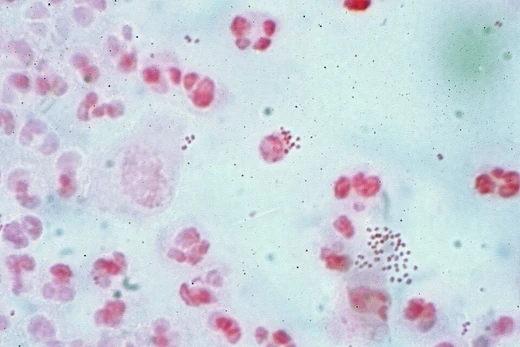
Neisseria gonorrhoeae
Gram-negative diplococcus causing gonorrhea and evolving antibiotic resistance.

An obligate human pathogen, it primarily colonizes the mucosal lining of the urogenital tract, but is also capable of adhering to the mucosa of the nose, pharynx, rectum, and conjunctiva. It causes the sexually transmitted genitourinary infection gonorrhea as well as other forms of gonococcal disease including disseminated gonococcemia, septic arthritis, and gonococcal ophthalmia neonatorum.
- first_isolated_by
- Albert Neisser
- gram_stain
- Gram-negative
- morphology
- Diplococci
- oxygen_requirement
- Microaerophile, capnophile
- pathogenicity
- Obligate human pathogen
- known_for
- Causing gonorrhea and antibiotic resistance
Lore & Background
N. gonorrhoeae is oxidase positive and a microaerophile that is capable of surviving phagocytosis and growing inside neutrophils. Culturing it requires carbon dioxide supplementation and enriched agar (chocolate agar) with various antibiotics (Thayer–Martin). It exhibits antigenic variation through genetic recombination of its pili and surface proteins that interact with the immune system. Sexual transmission is through vaginal, anal, or oral sex, and may be prevented through the use of barrier protection. Perinatal transmission may occur during childbirth, though it is preventable through antibiotic treatment of the mother before birth and application of antibiotic eye gel on the eyes of the newborn. Gonococcal infections do not result in protective immunity; therefore, individuals may be infected multiple times. Reinfection is possible due to N. gonorrhoeae's ability to evade the immune system by varying its surface proteins.
Reader's Guide
N. gonorrhoeae is a significant public health concern due to its role as the causative agent of gonorrhea, a common sexually transmitted infection. Asymptomatic infection is common in both males and females, and untreated infection may spread to the rest of the body, especially the joints, causing septic arthritis. In women, untreated infection may cause pelvic inflammatory disease and possible infertility due to scarring. The bacterium's ability to develop antibiotic resistance easily is a growing public health concern, with some strains exhibiting resistance to current ceftriaxone treatments. Its rapid adaptation to novel antimicrobial treatments has been seen several times since the 1930s, making numerous treatment plans obsolete. Diagnosis is through cultures, Gram staining, or nucleic acid tests of urine samples, urethral swabs, or cervical swabs, and chlamydia co-testing is recommended due to high rates of co-infection.
Did You Know?
- N. gonorrhoeae is an obligate human pathogen that primarily colonizes the urogenital tract mucosa.
- It can survive phagocytosis and grow inside neutrophils.
- Gonococcal infections do not result in protective immunity, allowing reinfection.
- Some strains have exhibited resistance to current ceftriaxone treatments.
Frequently Asked Questions
What are Neisseria gonorrhoeae's powers/role?
The gonococcus excels at latching onto mucosal surfaces, with a primary stronghold in the urogenital tract but also the pharynx, rectum, and conjunctiva. It is the sole causative agent of gonorrhea and can spread systemically to produce septic arthritis, disseminated gonococcemia, or neonatal eye infections.
How does Neisseria gonorrhoeae's story end?
There is no fixed ending; the organism keeps circulating in human populations while repeatedly evolving resistance to successive antibiotic classes. Its ongoing arms race with pharmaceuticals makes it a persistent, unresolved antagonist rather than a character with a concluded arc.
Why is Neisseria gonorrhoeae important?
As one of the most widespread sexually transmitted infections globally, it drives major public-health burdens including pelvic inflammatory disease, infertility, and neonatal blindness. Its relentless capacity to outpace new antibiotics also makes it a key model for studying bacterial adaptation under drug pressure.
What does Neisseria gonorrhoeae look like under the microscope?
It appears as pairs of kidney-bean-shaped cocci (diplococci) that take up the pink-red counterstain in a Gram preparation. As a microaerophile and capnophile, it thrives in low-oxygen, high-CO₂ niches such as warm mucosal linings.
More in Pathogenic Bacteria 1-20
Spotted an error? Know more?
This is a living reference — every entry is fact-audited, and reader corrections feed straight into our audit queue. Suggest an edit · See this site's audit record