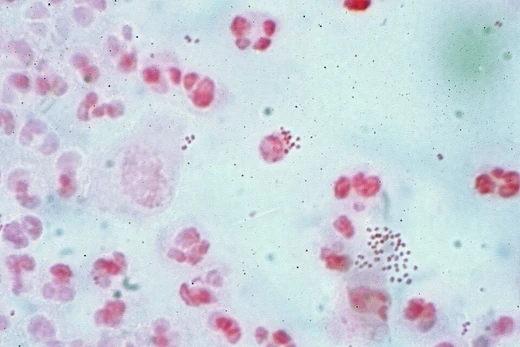
Chlamydia trachomatis
Obligate intracellular bacterium causing blindness and sexually transmitted infections.

Chlamydia trachomatis is a Gram-negative, obligate intracellular bacterium responsible for chlamydia and trachoma. It is the leading infectious cause of blindness and the most common sexually transmitted bacterium. The bacterium exists in two forms: an extracellular infectious elementary body and an intracellular non-infectious reticulate body.
- field
- Microbiology, Infectious disease
- known_for
- Causing chlamydia and trachoma; leading infectious cause of blindness; most common sexually transmitted bacterium
- discoverers
- Stanislaus von Prowazek and Ludwig Halberstädter
Lore & Background
Later, due to its small size and inability to grow in laboratory culture, it was thought to be a virus.
Reader's Guide
Chlamydia trachomatis is a significant human pathogen with a unique biphasic life cycle. The infectious elementary body attaches to host cells and enters using effector proteins, then transforms into the metabolically active reticulate body, which replicates inside a host vacuole called an inclusion. After 30 to 72 hours, the bacteria transition back to elementary bodies and are released to infect new cells. The bacterium lacks complete carbohydrate metabolism and imports ATP from the host via two ATP/ADP translocases. It also scavenges amino acids, nucleotides, and lipids. There are 18 serovars, divided into three biovars: A–C cause trachoma (the world's leading preventable infectious blindness), D–K cause genital tract infections, and L1–L3 cause lymphogranuloma venereum. Infections are often asymptomatic but can lead to pelvic inflammatory disease, epididymitis, urethritis, and conjunctivitis. Globally, about 84 million people have C. trachomatis eye infections, with 8 million cases resulting in blindness. The highest prevalence of genitourinary infections occurs in females aged 15 to 19. No vaccine is available due to poorly understood immunological pathways, but doxycycline is the preferred antibiotic treatment.
Did You Know?
- The bacterium has a reduced genome of about 1.04 megabases and lacks many biosynthetic pathways, relying on host ATP via two ATP/ADP translocases.
- There are 18 serovars of C. trachomatis, with serovars A–C causing trachoma, the leading infectious cause of blindness.
- Approximately 10-20% of infants who acquire chlamydial infection during birth develop pneumonia.
The Two-Form Life Cycle
Chlamydia trachomatis survives by cycling between two morphologically distinct states, neither of which is capable of independent movement. When it encounters a susceptible cell, the elementary body binds to the surface and is engulfed into a membrane-bound vacuole known as an inclusion. Over a window of 30 to 72 hours, the reticulate bodies proliferate dramatically while simultaneously reshaping the inclusion into a more permissive environment. Once replication is complete, the population reverts to the tough elementary body form, the host cell ruptures, and the newly freed elementary bodies are shed in semen or from the epithelial lining of the female genital tract, ready to latch onto the next susceptible cell and restart the cycle.
Metabolic Parasitism and Host Manipulation
trachomatis cannot sustain itself through independent biochemistry. It has shed the genes needed for complete carbohydrate metabolism, including hexokinase, the enzyme that would normally phosphorylate glucose. Instead, the bacterium siphons adenosine triphosphate directly from the host through two dedicated transporters called Npt1 and Npt2, and it pulls glucose-6-phosphate across the membrane via a UhpC antiporter. The reticulate bodies also harvest amino acids, nucleotides, and lipids from the surrounding cell. Beyond passive scavenging, the pathogen actively rewires host metabolism: it suppresses expression of p53, a glycolysis inhibitor, which drives infected cells toward aerobic glycolysis in a pattern strikingly similar to the Warburg effect seen in cancer. Pyruvate dehydrogenase kinase 2 then blocks conversion of pyruvate into acetyl-coenzyme A, shunting it toward lactate. The resulting acidic microenvironment helps the bacterium evade immune detection, while surplus glycolytic intermediates are funneled into the pentose phosphate pathway to generate nucleotides and other building blocks that fuel further bacterial growth.
A Century of Misidentification
For nearly six decades, scientists could not agree on what C. trachomatis actually was. That identification stuck for a time, but as the organism's tiny size became more apparent and it proved stubbornly unable to be cultivated on standard laboratory media, the scientific community shifted its thinking. By the mid-twentieth century, many researchers had reclassified it as a virus, reasoning that something so small and so dependent on a host cell for replication must fall outside the bacterial domain. That single imaging breakthrough repositioned C. trachomatis firmly within the prokaryotic world and opened the door to the antibiotic-based treatments that remain the backbone of clinical management today.
Global Disease Burden and Treatment Landscape
C. trachomatis is the most prevalent sexually transmitted bacterium worldwide and the leading infectious cause of blindness. Eighteen recognized serovars target mucosal surfaces in the genital tract and the eye, and infections frequently go unnoticed because they are asymptomatic. When complications do arise, they can be severe: pelvic inflammatory disease in women, epididymitis in men, along with urethritis, conjunctivitis, and lymphogranuloma venereum in both sexes. Genitourinary cases are diagnosed more often in women, with the highest prevalence among females aged 15 to 19. Neonates born to mothers with active infection face a pulmonary infection rate below 10 percent. The ocular burden is staggering: roughly 84 million people globally suffer C. trachomatis eye infections, and approximately 8 million of those cases progress to blindness. Despite the pathogen's enormous reach, no vaccine exists, largely because the immunological pathways it triggers remain poorly characterized. Treatment relies on antibiotics, with doxycycline serving as the preferred agent.
Frequently Asked Questions
Who is Chlamydia trachomatis?
Chlamydia trachomatis is a Gram-negative bacterium that cannot survive or multiply on its own and must live inside a host cell. It is the pathogen behind two well-known conditions: chlamydia, a sexually transmitted infection, and trachoma, a progressive eye disease.
What are Chlamydia trachomatis's powers or abilities?
It alternates between an infectious elementary body that can travel between cells and a non-infectious reticulate body that replicates within a host cell. This two-stage life cycle is what lets it spread from cell to cell while hiding from the immune system.
How does Chlamydia trachomatis's story end?
Left untreated, the infection can smolder for months, eventually producing scarring of the conjunctiva in trachoma or damage to the reproductive tract in chlamydia. With a proper course of antibiotics, however, the organism is cleared and long-term complications can be avoided.
Why is Chlamydia trachomatis considered such an important character?
It is the most commonly reported sexually transmitted bacterium worldwide and the single leading infectious cause of blindness. That combination of sheer prevalence and severe long-term consequences keeps it at the center of global public-health priorities.
More in Pathogenic Bacteria 1-20
Spotted an error? Know more?
This is a living reference — every entry is fact-audited, and reader corrections feed straight into our audit queue. Suggest an edit · See this site's audit record