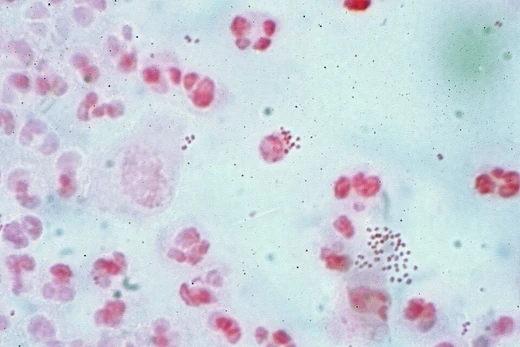
Helicobacter pylori
Gram-negative bacterium causing gastric ulcers and linked to stomach cancer.

Helicobacter pylori, previously known as Campylobacter pylori, is a gram-negative bacterium best known for its role in infecting the human stomach, often causing gastric ulcers and sometimes stomach cancer. Its helical body is thought to have evolved to penetrate the mucous lining of the stomach, helped by its flagella, and thereby establish infection.
- field
- Microbiology, Medicine
- known_for
- Causing gastric ulcers and stomach cancer; only bacterium known to cause cancer
- discovered_by
- Barry Marshall and Robin Warren
- global_infection_rate_2023
- About two-thirds of world population
Lore & Background
Helicobacter pylori is a species of gram-negative bacteria in the Helicobacter genus. About half the world's population is infected with H. pylori, but only a few strains are pathogenic. The bacterium is helical, often described as spiral or S-shaped, and its shape is maintained by enzymes in the cell wall's peptidoglycan. It reaches the less acidic mucosa by use of its flagella. H. pylori can convert from a helical to an inactive coccoid form that can evade the immune system, and may become viable but nonculturable. It is microaerophilic, requiring oxygen at lower concentration than in the atmosphere, and contains a hydrogenase that can produce energy by oxidizing molecular hydrogen made by intestinal bacteria.
Reader's Guide
Helicobacter pylori is significant as the only bacterium known to cause cancer, classified as a class 1 carcinogen. Infection is responsible for an estimated 89% of all gastric cancers and linked to 5.5% of all cancers worldwide. Persistent colonization with virulent strains can induce gastritis, chronic gastritis, atrophic gastritis, peptic ulcers, and gastric MALT lymphoma. Extragastric complications include anemia, diabetes, cardiovascular disease, and certain neurological disorders. An inverse association has been claimed with protective effects against asthma, esophageal cancer, and inflammatory bowel disease. Some studies suggest non-pathogenic strains may normalize stomach acid secretion and regulate appetite. The prevalence has declined due to eradication treatments and improved living standards. The proteome has been systematically analyzed, with more than 70% of proteins detected.
Did You Know?
- Helicobacter pylori is the only bacterium known to cause cancer.
- Over half of the global population is infected, but most individuals are asymptomatic.
- The bacterium can convert from a helical to an inactive coccoid form that evades the immune system.
- Urease is the most abundant protein in H. pylori, representing about 10% of total protein weight.
The Discovery That Rewrote Gastroenterology
For decades, the medical community largely dismissed the idea that bacteria could be responsible for stomach ulcers, despite scattered earlier observations by researchers such as John Lykoudis. The bacterium's significance extends far beyond ulcers: it is classified as a class 1 carcinogen and stands as the only bacterium confirmed to cause cancer in humans. An estimated 89 percent of all gastric cancers trace back to H. pylori infection, and the organism is implicated in roughly 5.5 percent of all cancer cases globally, including gastric MALT lymphoma. The discovery not only reshaped how physicians approach peptic disease but also established a precedent for bacterial causation of malignancy.
From Colonization to Carcinogenesis
Although roughly two-thirds of humanity carries H. pylori in their stomachs, the vast majority never develop symptoms. Illness emerges when persistent colonization by particularly virulent strains triggers a cascade of tissue damage. The process typically begins as gastritis, an inflammation of the gastric lining, which, if the infection lingers, progresses to chronic gastritis. Early chronic gastritis is non-atrophic, but ongoing injury can erode the mucosa into atrophic gastritis and eventually produce ulcers either within the stomach wall or in the duodenum. The location matters enormously for prognosis: a gastric ulcer carries a substantially elevated risk of progressing to malignancy, whereas a duodenal ulcer confers a comparatively lower cancer risk. Beyond the stomach, chronic infection has been associated with iron-deficiency or B12-deficiency anemia, diabetes, cardiovascular disease, and certain neurological conditions. The stepwise progression from benign inflammation to atrophy, ulceration, and ultimately cancer underscores why early detection and eradication of the organism remain critical in preventive medicine.
Architecture of an Intruder
The bacterium's distinctive helical or S-shaped body is no accident of morphology; it is an evolutionary adaptation that allows the organism to burrow through the thick, viscous mucus blanket protecting the stomach wall. Several enzymes embedded in the peptidoglycan layer of the cell wall maintain this spiral geometry, while a set of flagella propels the bacterium toward the less acidic mucosal surface where it can establish a foothold. Measuring roughly 2.8 to 3.3 micrometers in length with a near-constant diameter of about 0.55 to 0.58 micrometers, the organism is microaerophilic, thriving on oxygen at concentrations below atmospheric levels, and even harvests energy by oxidizing molecular hydrogen produced by neighboring gut bacteria. Its most abundant protein, urease, accounts for approximately ten percent of total cellular protein and is central to neutralizing local acidity. The bacterium can also switch to an inactive coccoid form that evades immune detection, and it forms biofilms that shield it from antibiotic action. Mutants that lose their helical shape and become rod-shaped tend to be markedly less virulent.
A Global Parasite With a Surprising Silver Lining
pylori, with prevalence concentrated in developing regions. In many high-income countries, infection rates have fallen steadily thanks to antibiotic and proton-pump-inhibitor eradication regimens alongside broader improvements in sanitation and living standards. Yet the story is not purely one of harm. A growing body of research points to an inverse relationship between H. pylori colonization and several conditions: asthma, esophageal cancer, gastroesophageal reflux disease, and Crohn's disease all appear less common in infected individuals. Some investigators propose that non-pathogenic strains of the bacterium help normalize gastric acid secretion and modulate appetite, while others suggest the organism shapes the broader ecology of the gastrointestinal tract by influencing which other bacterial species can successfully colonize. Only a small fraction of the hundreds of known H. This genetic diversity may explain why the same species can be a lethal carcinogen in one host and a benign, even protective, resident in another.
Frequently Asked Questions
How does Helicobacter pylori infect the stomach?
Its corkscrew body shape and flagella let it burrow through the thick mucus layer that protects the stomach wall. Once past that barrier, it establishes a persistent infection in the underlying tissue.
Why is Helicobacter pylori considered unique among pathogenic bacteria?
It holds the distinction of being the only bacterial species definitively linked to human cancer, specifically stomach cancer. Chronic infection can also produce peptic ulcers, making it a major global health concern.
How widespread is Helicobacter pylori infection?
As of recent estimates, roughly two-thirds of the global population carries this bacterium at some point. Most infected individuals never develop serious symptoms, though a subset goes on to develop ulcers or gastric malignancy.
More in Pathogenic Bacteria 1-20
Spotted an error? Know more?
This is a living reference — every entry is fact-audited, and reader corrections feed straight into our audit queue. Suggest an edit · See this site's audit record