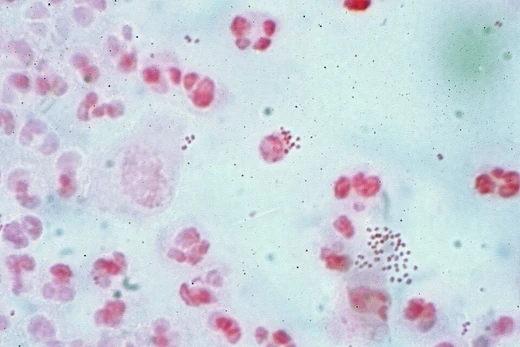
Mycoplasma pneumoniae
Smallest self-replicating bacterium causing atypical pneumonia in humans.

Mycoplasma pneumoniae is a species of very small-cell bacteria that lack a cell wall, classified in the class Mollicutes. It is a human pathogen that causes Mycoplasma pneumonia, a form of atypical bacterial pneumonia associated with cold agglutinin disease. As one of the smallest self-replicating organisms, its discovery and characterization marked a significant milestone in microbiology.
- field
- Microbiology
- known_for
- Causing atypical pneumonia (walking pneumonia); first mycoplasma proven to cause human disease
Lore & Background
These PPLOs were soon linked to pneumonias and arthritis in several animals. Hayflick, whose doctoral dissertation had been on animal diseases caused by PPLOs, reasoned the Eaton agent might be a mycoplasma. Using a novel agar and fluid medium he devised, Hayflick isolated a unique mycoplasma from egg yolk containing the Eaton agent. This was soon proven by Chanock and Hayflick to be the causative agent of primary atypical pneumonia. Emmy Klieneberger-Nobel suggested naming it Mycoplasma hayflickiae, but Hayflick demurred in favor of Mycoplasma pneumoniae. Taxonomically, M. pneumoniae is part of the Mollicutes class, characterized by lack of a peptidoglycan cell wall, making it inherently resistant to beta-lactam antibiotics. It uses a specialized attachment organelle to adhere to respiratory tract cells, and its persistence is associated with its ability to mimic host cell surface composition.
Reader's Guide
Mycoplasma pneumoniae holds significant importance in medical microbiology as the first mycoplasma proven to cause a human disease. The organism's lack of a cell wall makes it inherently resistant to antibiotics targeting cell wall synthesis, such as beta-lactams, and treatment typically involves macrolides or tetracyclines that inhibit protein synthesis. However, resistance has been increasing, particularly in Asia, due to mutations in the 23S rRNA gene. Pathogenic mechanisms include host cell adhesion, cilia loss, hydrogen peroxide release, and production of a unique CARDS toxin, contributing to respiratory symptoms and complications such as bronchial asthma and chronic obstructive pulmonary disease. The organism's reduced genome and dependence on host metabolism highlight its parasitic lifestyle. Its discovery also advanced understanding of mycoplasmas as a class, which are among the smallest self-replicating organisms and are thought to have evolved by degenerative evolution from gram-positive eubacteria. The inverted microscope under which Hayflick discovered M. pneumoniae is kept by the Smithsonian Institution.
Did You Know?
- Mycoplasma pneumoniae is one of the smallest self-replicating organisms, with cells approximately 0.1–0.2 μm wide and 1–2 μm long.
- The organism lacks a cell wall, making it inherently resistant to beta-lactam antibiotics like penicillin.
Frequently Asked Questions
Who is Mycoplasma pneumoniae?
Mycoplasma pneumoniae is a tiny, wall-less bacterium in the class Mollicutes and the first member of the mycoplasma group ever confirmed as a human pathogen. It ranks among the smallest organisms on Earth that can still replicate on its own.
What are Mycoplasma pneumoniae's powers or role?
Its signature move is triggering atypical pneumonia—widely nicknamed 'walking pneumonia'—and it can also be tied to cold agglutinin disease. Because it lacks a cell wall entirely, it dodges the whole class of antibiotics that work by disrupting wall synthesis.
How does Mycoplasma pneumoniae's story end?
In a typical infection the host's immune system eventually clears the organism, although the lingering cough and respiratory symptoms can stretch on for several weeks. There is no chronic 'villain arc'; once eliminated, it does not establish a lifelong residency in the body.
More in Pathogenic Bacteria 1-20
Spotted an error? Know more?
This is a living reference — every entry is fact-audited, and reader corrections feed straight into our audit queue. Suggest an edit · See this site's audit record