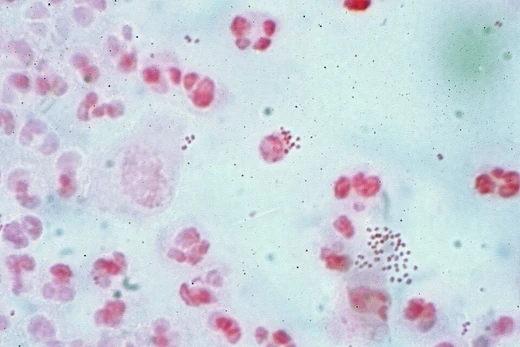
Mycobacterium tuberculosis

Mycobacterium tuberculosis (M. tb), also known as Koch's bacillus, is a species of pathogenic bacteria in the family Mycobacteriaceae and the causative agent of tuberculosis. Primarily a pathogen of the mammalian respiratory system, it infects the lungs and requires high levels of oxygen to grow.
- discoverer
- Robert Koch
- field
- Microbiology
- type
- Pathogenic bacterium
- known_for
- Causing tuberculosis
Lore & Background
Mycobacterium tuberculosis is a small, nonmotile bacillus that divides extremely slowly, every 18–24 hours, compared to bacteria like Escherichia coli which divide roughly every 20 minutes. Its cell wall is rich in lipids such as mycolic acid and cord factor glycolipid, which contribute to its resistance to desiccation and weak disinfectants, and allow it to survive in a dry state for weeks. Under a microscope, cells are curved rod-shaped and often seen wrapped together in a pattern called cording, due to fatty acids in the cell wall. In tissue, it is characterized by caseating granulomas containing Langhans giant cells with a 'horseshoe' pattern of nuclei.
Reader's Guide
Mycobacterium tuberculosis is significant as the primary cause of tuberculosis, a major infectious disease that primarily affects the lungs. Its unusual cell wall, rich in mycolic acid, makes it resistant to Gram staining and requires specialized acid-fast stains like Ziehl–Neelsen or fluorescent stains like auramine for microscopic identification. The bacterium's slow growth rate—doubling roughly once per day—complicates laboratory culture, with visible colonies requiring several weeks on agar plates. Humans are the only known reservoirs, and transmission occurs through airborne droplets from coughing, sneezing, speaking, or singing. Inside the lungs, M. tuberculosis is phagocytosed by alveolar macrophages but evades killing by blocking phagosome-lysosome fusion, neutralizing reactive nitrogen intermediates, and secreting a nucleoside that neutralizes pH. The bacterium's ability to develop resistance to multiple drugs, due to gene mutations, poses ongoing challenges for treatment.
Did You Know?
- M. tuberculosis divides every 18–24 hours, extremely slow compared to Escherichia coli which divides roughly every 20 minutes.
- Its cell wall contains cord factor glycolipid, which inhibits fusion of the phagosome with the lysosome in macrophages.
- The bacterium can survive in a dry state for weeks and withstand weak disinfectants.
- Strain typing using variable numbers of tandem repeats (VNTR) helps investigate tuberculosis outbreaks.
Frequently Asked Questions
Who is Mycobacterium tuberculosis?
Mycobacterium tuberculosis, commonly nicknamed Koch's bacillus, is a pathogenic bacterium in the Mycobacteriaceae family and the sole organism responsible for causing tuberculosis. It is a strict respiratory pathogen that targets the lung tissue of mammals.
What are Mycobacterium tuberculosis's powers or special abilities?
Its signature trait is a thick, waxy outer layer packed with mycolic acid, which renders it nearly impossible to stain with a standard Gram procedure and gives it only a faint Gram-positive appearance. That same lipid-rich coat helps it shrug off many disinfectants and immune attacks, while its demand for high oxygen levels keeps it anchored in well-ventilated lung tissue.
How does Mycobacterium tuberculosis's story end?
In the canonical arc, a multi-drug antibiotic regimen—typically isoniazid, rifampin, ethambutol, and pyrazinamide—over six to nine months eradicates the organism from the patient. Without treatment, however, the bacterium can enter a long dormant phase and reactivate years later, making its 'ending' one of the most protracted storylines in all of microbiology.
More in Pathogenic Bacteria 1-20
Spotted an error? Know more?
This is a living reference — every entry is fact-audited, and reader corrections feed straight into our audit queue. Suggest an edit · See this site's audit record