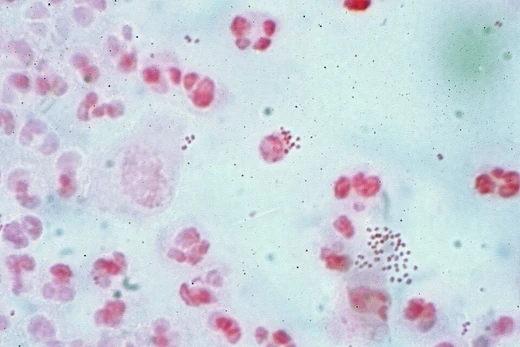
Listeria monocytogenes
A virulent foodborne pathogen causing listeriosis, often fatal in high-risk groups.

Listeria monocytogenes is a species of pathogenic bacteria that causes the infection listeriosis. It is a facultative anaerobic bacterium, capable of surviving with or without oxygen, and can grow and reproduce inside host cells. It is one of the most virulent foodborne pathogens, with twenty to thirty percent of foodborne listeriosis infections in high-risk individuals potentially fatal.
- field
- Bacteriology, Foodborne Pathogens
- known_for
- Causing listeriosis, a serious foodborne infection with high mortality in high-risk individuals
- gram_stain
- Gram-positive
- motility
- Motile via flagella at 30°C and below; moves within eukaryotic cells by actin polymerization
- serotypes
- 13 serotypes; 90% of human isolates are serotypes 1/2a, 1/2b, and 4b
Lore & Background
Listeria monocytogenes was first described by E.G.D. Listeriosis in adults was later associated with patients living with compromised immune systems, such as those taking immunosuppressant drugs or with HIV infection. L.
Reader's Guide
Listeria monocytogenes is a significant pathogen due to its high virulence and ability to cause severe disease, particularly in pregnant women, newborns, and immunocompromised individuals. Its ability to grow at refrigeration temperatures (as low as 0°C) makes it a persistent hazard in the food industry. The bacterium's pathogenesis involves survival and multiplication in phagocytic host cells, and it can infect the brain, spinal-cord membranes, and bloodstream. Pregnant women are often advised to avoid soft cheeses that may be contaminated. The three serotypes 1/2a, 1/2b, and 4b account for over 90% of human isolates, with serotype 4b responsible for 33 to 35% of sporadic cases and all major foodborne outbreaks in Europe and North America since the 1980s.
Did You Know?
- Listeria monocytogenes can grow at temperatures as low as 0°C, allowing multiplication in refrigerated foods.
- It is the third most common cause of meningitis in newborns.
- The bacterium moves within host cells by explosive polymerization of actin filaments, forming comet tails.
- Up to 10% of human gastrointestinal tracts may be colonized by L. monocytogenes.
Frequently Asked Questions
What are Listeria monocytogenes's powers and abilities?
It can grow and replicate inside host cells, propelling itself through eukaryotic cytoplasm via actin polymerization. At 30 °C and below it also swims freely using flagella, and its facultative anaerobic metabolism lets it thrive with or without oxygen.
How does Listeria monocytogenes's story end?
In high-risk groups—pregnant women, neonates, the elderly, and immunocompromised patients—twenty to thirty percent of foodborne listeriosis cases can be fatal. In otherwise healthy adults the infection is typically milder but still requires prompt medical treatment.
Why is Listeria monocytogenes so important in the canon?
It is regarded as one of the most virulent foodborne pathogens in bacteriology, largely because it can multiply at refrigeration temperatures and invade cells that most other foodborne bacteria cannot. This makes it a cornerstone figure in food-safety research and public-health policy.
More in Pathogenic Bacteria 1-20
Spotted an error? Know more?
This is a living reference — every entry is fact-audited, and reader corrections feed straight into our audit queue. Suggest an edit · See this site's audit record